Table of Content
Within the first 1/3rd put your speakers and on the last 1/3rdof the room. So that both speaker and sofa/couch both have distance behind them for better audio.this method of placement reduces standing waves and reflections. As you leave a distance behind your speakers, it reduces the over-emphasis on bass to an accurate level.
Have you run your receiver's room calibration system yet? If not go ahead and do that, and the receiver should automatically detect the 3.1-channel setup that you're using. I expect these two changes will make a dramatic improvement to your listening experience.
Center channel speaker
But there are huge differences in loudspeaker placement when you compare home theater speaker placement against a movie theater. For one, home theaters tend to be more reflective in their acoustical properties. A movie theater is designed to be almost completely “dead”. Nearly all of the sound you hear in a theater is coming from the speakers. Consider placing your speakers behind the listening position.
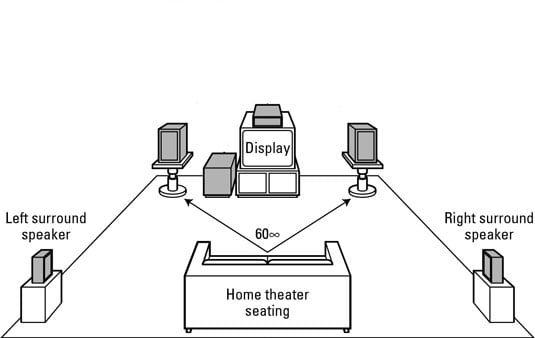
Also try experimenting with “toe-in” or aiming the speaker directly at the center seat, versus having them firing straight out, to the left and right, of the seat. Will it be OK to put speakers in a 9 ft. ceiling and exactly where should they be. Speaker placement could be an exact science, were it not for the fact that hardly anyone has the perfect room! It’s like going fishing—if you have the right attitude you know the process is going to be fun no matter what the result. This arrangement makes the best use of your space if your TV is in a corner.
How to Place Your Speakers for the Best Sound
The closer you put them to the wall, the more bass you’ll get, which might be good if your woofer is not the best, but most of the time that won’t be necessary. However, this doesn’t mean that you can put it just anywhere. Your sub comes enclosed in a box, so putting it in an enclosed area is going to muddy the sound, and you won’t get what you’re paying for. For example, you should not put it in a corner, under the couch, under your desk, or in some similar place. The subwoofer is there to handle the low frequencies, while the other speakers are full-range speakers that mostly deal with higher frequencies. Due to the different frequencies these speakers handle, it’s important to find the right place for each one.
The ‘sweet spot’ is a point that you can find when the separation between the speakers will be equal or higher than the separation between the speaker and the user seat. There should be any large or small object placed between the speakers and the users like a DVD stack, etc. our ultimate focus is to reduce the reflection of sound waves. Virtual audio technology allows you to compare sonic characteristics between speakers so you can make a more informed shopping decision. If the room is too live (you're getting harsh reflections), then adding sound-absorbing materials will help. Some speakers sound their best facing straight forward.
More than 11-channels speakers placement
Learn the role that each speaker plays, along with tips for choosing the right ones for your system. As for wireless transmission to rear speakers, I recommend giving one of our Advisors a shout to see which solution will work best for your system. First, if you don't already have a subwoofer in your system I highly recommend adding one. Deep, driving bass is a powerful catalyst for excellent workouts, and the right sub will make an immediate impact to the quality of your system's sound. That sounds like a wonderful space to enjoy some tunes. I have two suggestions that should improve your listening experience.
And the front and center speakers are located behind a perforated screen so that the sound emanates completely from the on-screen action. While this is possible in home theater that uses a front projection system, it’s often not practical to place speakers behind a screen. The good news for you is that most people can move speakers around a room without much trouble or even having to break out the cordless power tools. Plus, if you’re still in the setup stage, you can try out several locations to find one that’s right for you before you do a final install.
It may be hard, but get your speakers as close to these positions as possible for the best sound. Here you have to place the sub at your listening position. Then walk around the room with SPL as you listen to a heavy-bass track. The floor-standing speakers don’t have the hassle of shelves or stands.

This means that Bookshelf Speakers should be placed on stands. Try to keep them away from walls and out of actual bookshelves unless they are specifically designed for that type of placement. You need to add 2 or 4 ceiling speakers to your existing surround sound system to create such a system. This configuration will receive one more character after the period in the name.
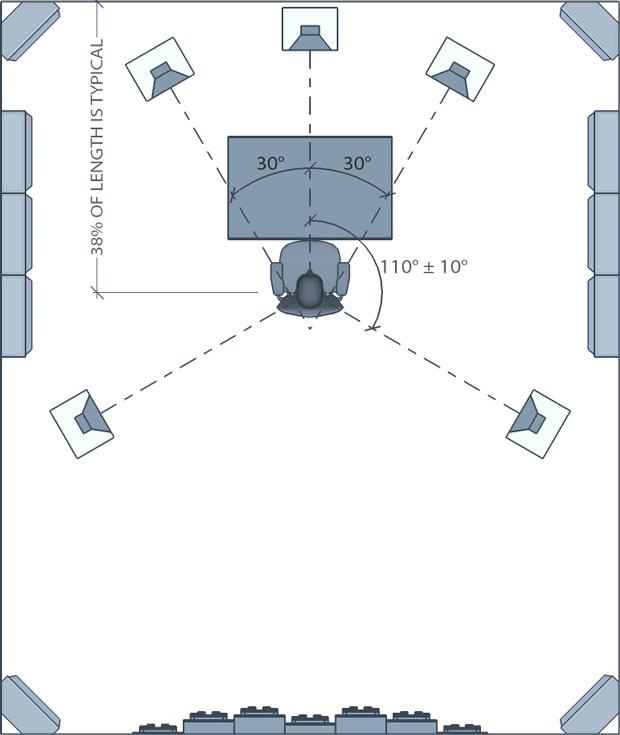
Listening to the same passage after each adjustment helps me gauge how much of a difference a particular change in positioning made. Pulling the main speakers away from the corners will reduce boundary reflections and improve imaging. For tower speakers, the tweeter should already be at an average height, but you can always double-check, and raise or tilt them if necessary. ● The height should be as close to ear-level as possible without blocking your display. Correct acoustics position ensures you will enjoy your audio system all the time.
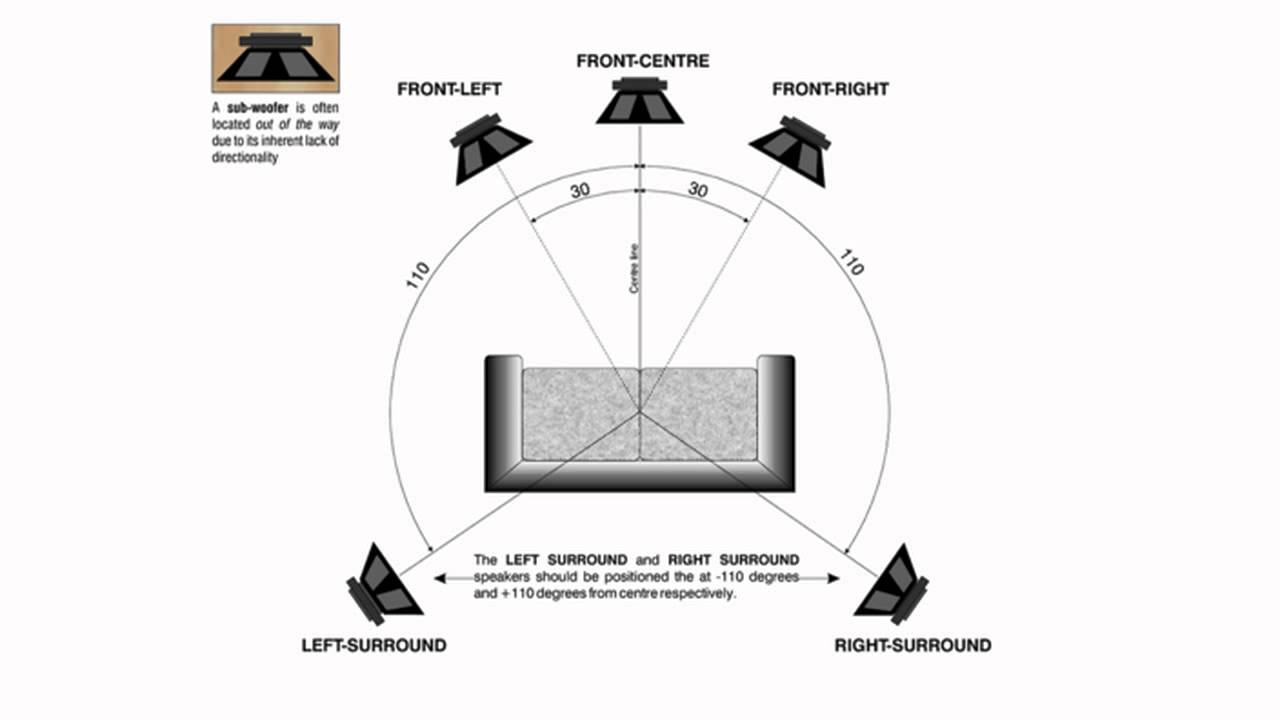
Overall try to position them between 22 – 30 degrees from the focal point. Ideally your center channel’s tweeter, that’s the smallest driver that reproduces the highest frequencies, should be at ear level. However, this just isn’t practical with a center channel because ear-level is pretty close to eye-level, and is typically in the middle of your display. You don’t want your center channel blocking your view, so angle the speaker up or down slightly to aim the tweeter at your ears.
We recommend any overhead speaker installation be performed by professional installers with experience installing overhead speakers. Whether you put the sub too close to a wall, the sound would be loud and unnatural, which is not what you want. If the submarine has a port, measure the diameter of the port, multiply it by two, and position it at the distance from the wall. A subwoofer should be placed at least 30cm away from a corner. It will produce more bass if it is placed next to walls, or if it is placed on a corner with three space borders, the bass will be enhanced.
Feel free to give one of our Advisors a shout for free, personalized advice picking out the right gear for your gym. If you have a room that doesn't naturally lend itself to surround sound, consider using a high-end sound bar or a 3.1 system. I'm a fan of using two subs to make movies and gaming as enjoyable as possible.
In a 5.1 system your surround speakers are best placed to the left and right of your listening position. Space them apart the same distance as your front speakers , and face them toward you. The optimal location for the wide speakers is about 60 degrees off-axis, relative to the primary seating position. Audyssey recommends that the wide speakers be placed at head level when seated. Wide Speaker Channels The wide speaker channels are intended to be placed between the main front speakers and the side surround speakers.
The distance between the speakers should be 8 feet more or less. The distance between speakers with the back wall sidewall should be 2-3 feet. However this is not the end of the story, the audio quality also depends on room acoustics like reflection, diffusion, or absorption from surfaces/furniture of the room. There are some suggestions where it is recommended to place speakers with a separation of D and then allow the user to sit 1.5 times D distance away.




No comments:
Post a Comment